
Where We’ve Been This Summer: Canada & USA
One platform + multiple environments = a busy summer in the field
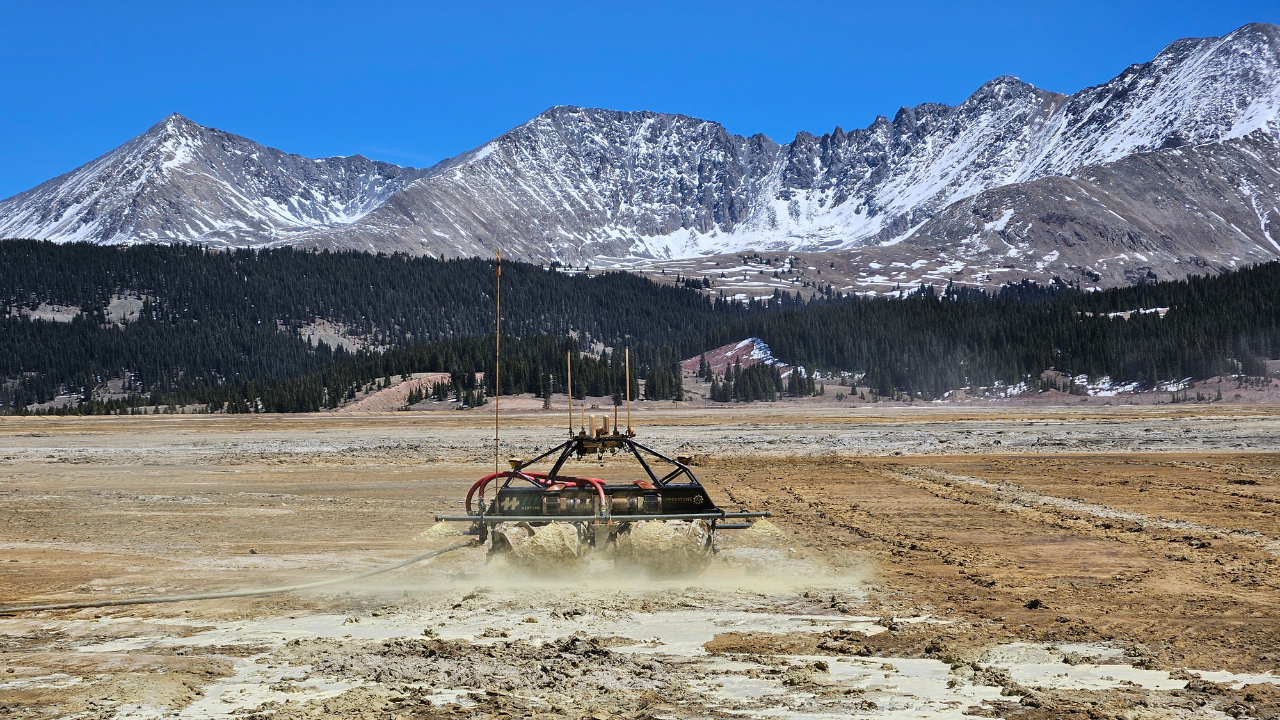
This summer, the Copperstone Technologies team has been putting our HELIX Neptune to work across Canada and the United States, supporting projects in dust suppression, bathymetry, search and rescue, and more!
From mine sites and tailings facilities to challenging water environments, Neptune continues to demonstrate what an unmanned amphibious platform can do when people, equipment, and difficult terrain don’t always mix.
Here’s a look at where we’ve been this summer.
Moving Forward on Dust Suppression
Dust suppression has been a major focus for Neptune this summer.
At tailings facilities, Neptune can pull a hose and spray system across the tailings beach, allowing operators to apply suppressant without putting personnel onto the beach itself.
The platform is designed to navigate challenging terrain while providing controlled coverage across large areas. With Neptune, teams can also capture application data, including where, when, and how much product was applied, helping provide a record of the work completed.
This summer’s field work has included dust suppression pilots and demonstrations as we continue working with industry to explore alternatives to more traditional application methods.
Bathymetry: Going Where the Boat Can’t
Bathymetry has been another major part of Neptune’s field work this summer.
Our HELIX Neptune has been deployed on bathymetry projects, collecting underwater data in environments where traditional survey methods can be challenging. Equipped with our Neptune Bathymetry package, the platform can navigate across land and water while collecting the data needed to understand what’s happening below the surface.
From mine water environments to tailings facilities, these projects have demonstrated how an unmanned amphibious platform can provide access to areas that may be difficult for conventional survey equipment to reach.
Supporting Search & Rescue
This year, Neptune has also been deployed for search and rescue operations, putting its remote-controlled capabilities to work in real-world situations.
Neptune has been used to search for people and search challenging areas, allowing teams to remotely access terrain and water environments that can be difficult or unsafe to navigate on foot or by conventional equipment.
Whether searching along shorelines, through shallow water, or across difficult terrain, Neptune provides a way for search teams to extend their reach while keeping personnel out of potentially hazardous areas.
These deployments have given us valuable experience in using Neptune as a tool to support search and rescue teams when access and conditions are challenging. In some situations, these efforts can also help search teams locate remains, providing answers and support to families and loved ones.
From Canada to the USA
One of the most exciting parts of this summer has been seeing Neptune operate across a range of environments and applications throughout Canada and the United States.
Every site presents a different combination of terrain, water conditions, weather, access requirements, and operational goals. That’s exactly where the HELIX platform is designed to fit.
Rather than being limited to one specific application, Neptune provides a flexible platform that can be configured for the job at hand—from dust suppression and bathymetry to environmental monitoring, sampling, search and rescue, and more.
And We’re Not Done Yet
As summer comes to a close, the field season isn’t slowing down.
We’re continuing to work with customers and industry partners to put Neptune to the test, gather real-world data, and develop new applications for unmanned amphibious technology.
Canada and the USA have kept us busy this summer. We’re looking forward to seeing where Neptune goes next.